Dunhuang vs. Turpan: Which Silk Road Oasis Should You Visit First? (2026 Comparison)
Dunhuang vs. Turpan: Which Silk Road Oasis Should You Visit First?
When planning an expedition along China’s ancient Silk Road, two desert oasis hubs consistently dominate every traveler’s wishlist: Dunhuang (敦煌) in western Gansu and Turpan (吐鲁番) in eastern Xinjiang.
Both cities flourished as critical trading and cultural crossroads where merchant caravans rested before braving the unforgiving deserts of Central Asia. Both boast ancient Buddhist cave temples, dramatic wind-carved landscapes, and rich agricultural ingenuity carved out of dry sand.
However, despite their shared Silk Road heritage, the on-the-ground travel experience in Dunhuang and Turpan could not be more different.
Dunhuang is an artistic powerhouse defined by soaring singing dunes and thousand-year-old Buddhist art. Turpan is a geological furnace immersed in Uyghur culture, sunken basins, and sprawling subterranean canal systems.
If your vacation time is limited to a single multi-day stopover, which oasis should you prioritize? In this head-to-head 2026 comparison, we evaluate both destinations across culture, terrain, logistics, and seasonal comfort.
1. Cave Art & History: Mogao vs. Bezeklik
If ancient art, religious heritage, and archaeological depth are your primary interests, Dunhuang takes the crown.
- Dunhuang (Mogao Caves): Recognized as a UNESCO World Heritage site, Mogao preserves over 735 caves with 45,000 square meters of intact murals spanning from the 4th to the 14th centuries. The scale, vibrancy, and preservation of Dunhuang’s frescoes are unmatched anywhere along the entire Eurasian trade corridor.
- Turpan (Bezeklik Thousand Buddha Caves & Ancient Cities): Turpan’s heritage centers on the ruined Silk Road cities of Jiaohe (交河故城) and Gaochang (高昌故城). Jiaohe, carved directly out of a high river bluff, is one of the world’s best-preserved earthen ancient capitals. However, many murals at Bezeklik suffered severe defacement and foreign expedition removal in the early 20th century.
Verdict on Culture: Visit Dunhuang for preserved Buddhist iconography and cave art; visit Turpan for atmospheric earthen citadel ruins and Silk Road trade architecture.
2. Desert Landscapes & Natural Scenery
Both destinations border hyper-arid wilderness, but their topography feels worlds apart.
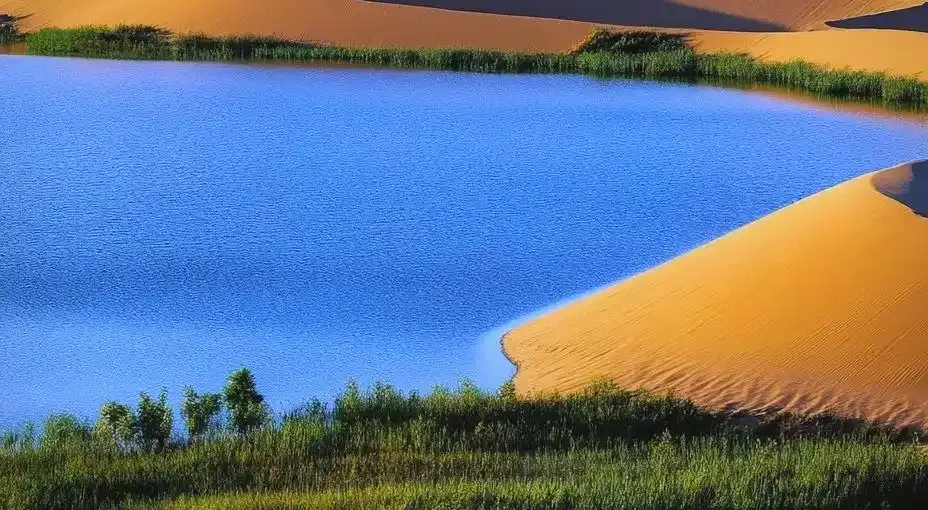
- Dunhuang (Mingsha Shan & Crescent Lake): Towering golden sand dunes rise directly at the edge of town. Visitors can trek barefoot across razor-sharp dune crests, ride camels, or photograph the idyllic Crescent Spring surrounded by sweeping desert waves.
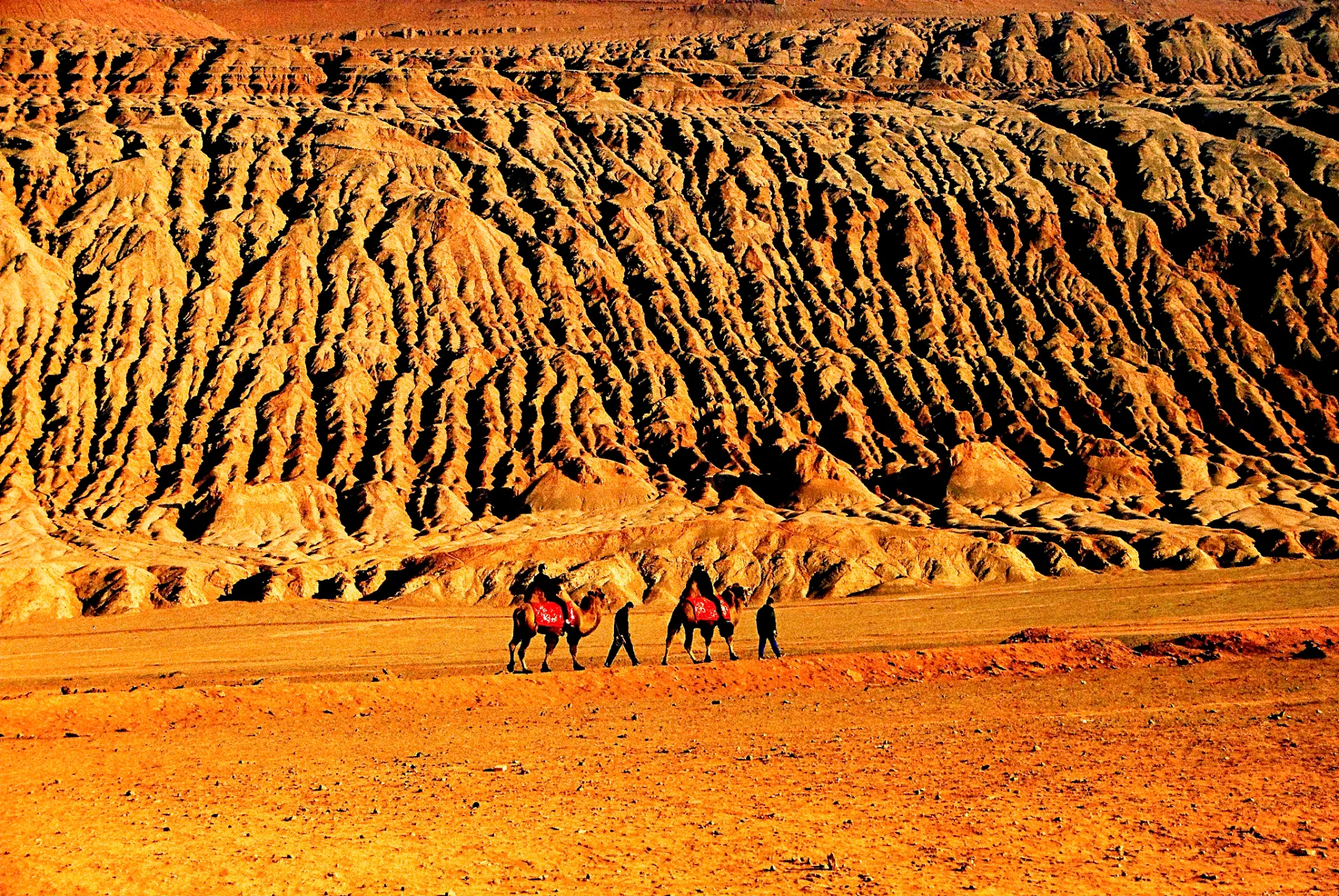
- Turpan (Flaming Mountains & Kumtag Desert): Nestled in the second-lowest terrestrial depression on Earth (-154 meters below sea level), Turpan features the scorched red ravines of the Flaming Mountains (火焰山) and the sweeping sandy margins of the Kumtag Desert (库木塔格沙漠). The visual impact is Martian and raw.
3. Quick Decision Matrix: Dunhuang vs. Turpan
| Category | Dunhuang (Gansu) | Turpan (Xinjiang) |
|---|---|---|
| Primary Appeal | Mogao Caves art, Singing Sand Dunes | Jiaohe Citadel ruins, Uyghur culture, Karez |
| Summer Heat | Hot & dry (~35°C / 95°F) | Extreme furnace heat (~42°C+ / 108°F) |
| High-Speed Rail | Connects to Lanzhou & Xi’an easily | Direct high-speed train link to Dunhuang (3.5h) |
| Recommended Stay | 2 to 3 full days | 1 to 2 days |
| Best Travel Months | May to October | April to June, September to October |
4. The Smart Move: Combine Both via Bullet Train
You don’t necessarily have to choose between the two.
Thanks to the Lanzhou–Xinjiang High-Speed Railway network, Dunhuang (via Liuyuan South Station) and Turpan North Station are connected in just 3.5 to 4 hours by daily bullet trains.
The Recommended Overland Flow:
- Arrive in Lanzhou and travel west through the Hexi Corridor (Zhangye -> Jiayuguan -> Dunhuang).
- Spend 2.5 days exploring Mogao Caves and Crescent Lake.
- Catch the afternoon high-speed train from Liuyuan South directly into Turpan.
- Spend 2 days touring Jiaohe, Grape Valley, and the Karez Well systems before flying out of Urumqi.
Plan Your Silk Road Oasis Route with Alex
Balancing high-speed train timetables between Gansu and Xinjiang, arranging registered foreign-friendly desert stays, and timing visits to avoid mid-day desert heat can be overwhelming.
We bridge both provinces into an effortless overland expedition.
When you book a custom Silk Road trip with our team:
- Cross-Border Route Synergy: Private transfers from Dunhuang hotels to Liuyuan bullet train platforms, with greeting drivers ready on the Turpan arrival side.
- Heat-Optimized Pacing: Morning and sunset site visits to protect you from the scorching midday heat in Turpan and the Gobi Desert.
- Pre-Booked Mogao Passes: We secure Category-A tickets for Mogao’s digital exhibition and primary cave chambers well in advance.
Check out our 7-Day Silk Road Itinerary Guide to plan the Gansu leg, or click Contact Me at the top of the page to build your custom Dunhuang & Xinjiang itinerary today!