
China 144-Hour & Visa-Free Policies: Can You Visit Gansu and the Silk Road? (2026 Guide)
China 144-Hour & Visa-Free Policies: Can You Visit Gansu and the Silk Road?
With China significantly expanding its international border access and introducing mutual and unilateral visa-free entry for dozens of European, Oceanian, and Asian nations, traveling to the ancient Middle Kingdom has never been more accessible.
However, a massive wave of confusion surrounds China’s 144-Hour Visa-Free Transit scheme versus true bilateral or unilateral visa exemptions.
Almost daily, international travelers ask:
“Can I use the 144-hour visa-free transit to fly into Lanzhou or Dunhuang to see the Mogao Caves?”
The short answer is no for the 144-hour transit, but YES if you qualify under the recent unilateral visa-free expansion or standard tourist visas.
In this clear, no-nonsense 2026 breakdown, we untangle the immigration rules, geographic restrictions, and best strategies for unlocking Gansu and the Silk Road hassle-free.
1. The 144-Hour Visa-Free Transit: Why It Doesn’t Cover Gansu
The popular 144-Hour (6-Day) Visa-Free Transit Policy allows citizens from 54 designated countries to enter China without applying for a visa at an embassy—provided they meet three strict criteria:
- You must be in immediate transit to a third country or region (e.g., London -> Shanghai -> Tokyo). Round trips (e.g., London -> Shanghai -> London) do not qualify.
- You must enter through an approved international port (such as Beijing, Shanghai, Xi’an, or Chengdu).
- The Geographic Trap: You are legally confined to the administrative region of your entry port.
Why This Rules Out Gansu:
- No Direct 144-Hour Ports in Gansu: Neither Lanzhou Zhongchuan Airport (LHW) nor Dunhuang Mogao Airport (DNH) operates an independent 144-hour visa-free transit entry checkpoint.
- Provincial Movement Bans: If you enter via Xi’an (Shaanxi Province) on a 144-hour transit permit, immigration rules strictly prohibit you from crossing the provincial border west into Gansu or Qinghai. Boarding a bullet train to Tianshui or Zhangye violates your temporary stay permit and can result in hefty fines or deportation.
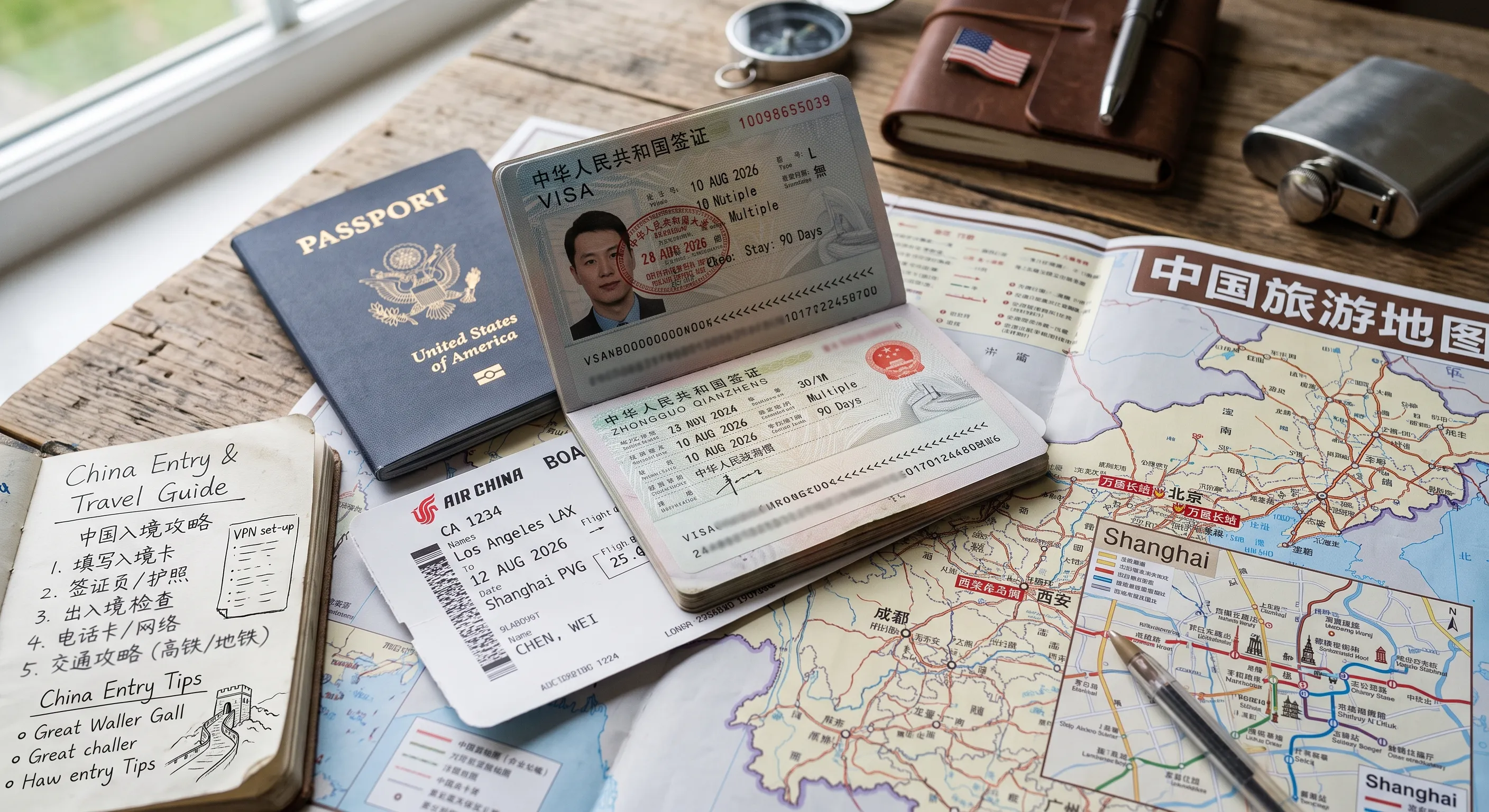
2. The Real Game-Changer: Unilateral Visa-Free Entry (15 to 30 Days)
While the 144-hour transit will not get you to Dunhuang, the Unilateral Visa-Free Policy introduced by China certainly will.
Citizens of an expanding list of countries—including Germany, France, Italy, the Netherlands, Spain, Switzerland, Australia, New Zealand, Malaysia, Singapore, and several others—can enter China completely visa-free for up to 15 or 30 days for tourism, business, and family visits.
Why This is Ideal for Gansu:
- Zero Movement Restrictions: You can travel anywhere across China’s open provinces, including all of Gansu, Qinghai, and Xinjiang.
- Flexible Routing: You can enter via Beijing, fly to Lanzhou, take high-speed trains to Dunhuang, and depart through any open international airport.
- No Third-Country Flight Requirement: Point-to-point round-trip flights are fully permitted.
3. What If Your Country Isn’t Visa-Free? (The Standard L-Visa)
If you hold a passport from the United States, Canada, the UK, or other nations not yet included on the unilateral visa-exemption list, you will need a standard Tourist L-Visa.
Fortunately, China has simplified the L-Visa application process:
-
No Round-Trip Flight Proof Required in Advance in many jurisdictions.
-
Ten-Year Multi-Entry Visas: Frequently issued to US and Canadian passport holders, allowing multiple 60-day or 90-day stays per entry.
-
Advance Planning: Apply at your nearest Chinese Visa Application Service Center (CVASC) 4 to 6 weeks before your planned departure date.
-
4. Foreign Registration in Gansu: What You Must Know
Regardless of which visa or exemption you enter under, Chinese immigration law requires all foreign nationals to register their accommodation:
- Hotels: When staying at hotels licensed to host foreign guests, the front desk automatically submits your passport details to the local Public Security Bureau (PSB).
- Guesthouses and Homestays: In remote areas like Zhagana or Gannan pastures, staying at unapproved local guesthouses can lead to late-night check-in issues. Always ensure your accommodation is vetted for international travelers.

Travel the Silk Road Stress-Free with Alex
Navigating shifting visa regulations, verifying hotel foreign-reception licenses, and planning a multi-city overland trip across Northwest China can be confusing.
We simplify your entire China journey from the moment you land.
When you book a private Silk Road itinerary with us:
- Visa Support Letters: If you are applying for an L-Visa, we provide confirmed itinerary documentation and official invitation letters to support your embassy application.
- Licensed Expat-Friendly Stays: Every boutique hotel, yurt, and desert camp we book is 100% pre-cleared for international passports.
- Flawless Transport Logistics: From bullet train bookings to private 4WD overland vehicles, we ensure your travel between cities is completely seamless.
Check out our 7-Day Silk Road Itinerary Guide to map your dream route, or hit Contact Me at the top of the page to ask Alex about your travel logistics today!